

The Growing Bag Under The Sink That Nobody Quite Knows What To Do With
Flexible plastics are coming to kerbside collection in England. But the household storage problem needs solving long before collection day arrives.
Many households have a version of the same drawer.
It starts as a reasonable idea: a spot to collect the soft plastics that cannot go in the recycling bin. A bread bag goes in. A crisp packet. The frozen food wrapper that says "not recyclable at home" on the back. By the end of the first week, the drawer is already straining. By the end of the second, it has taken over a shelf.
The intention is good. The system just has not caught up with it yet.
Flexible plastics, including crisp packets, bread bags, film packaging, chocolate wrappers, and frozen food wrap, are collected by roughly one in eight English councils at the kerbside. For the other seven in eight households, the guidance is still the same: store them at home until you can get to a store drop-off, or put them in the general waste.
That is changing with the Simpler Recycling reforms, which require every English council to provide kerbside collection of flexible plastics by 31 March 2027. Most councils are adopting what is known as the "bag in bin" method: residents collect their flexible plastics in a clear bag at home, then place the sealed bag in the kerbside recycling bin on collection day.
The method works, according to the FlexCollect pilot, which ran across ten councils and more than 160,000 households between 2022 and 2025. Contamination was low and participation held up over time. But research during the pilot also found that storage at home was consistently one of the biggest practical barriers to sustained participation. Flexible plastics are bulky relative to their weight, and a week's worth takes up more space than most people expect when they first start collecting them.
The pattern is familiar from earlier recycling transitions. When food waste caddies were introduced across England and Wales, how easy the storage was at home turned out to be a strong predictor of whether households used them consistently. Households with a convenient, contained solution next to the kitchen bin used them regularly. Those that found the system physically awkward tended to revert to the general waste bag over time.
Flexible plastics present a similar challenge. A bag of soft plastics does not smell or make noise: it just quietly fills up, until it becomes too much to ignore and the easiest answer is the wrong bin. Understanding this is not a moral failure; it is a design problem. The system is not yet set up to make participation easy, but the household that solves the storage problem before collection arrives is already most of the way there.
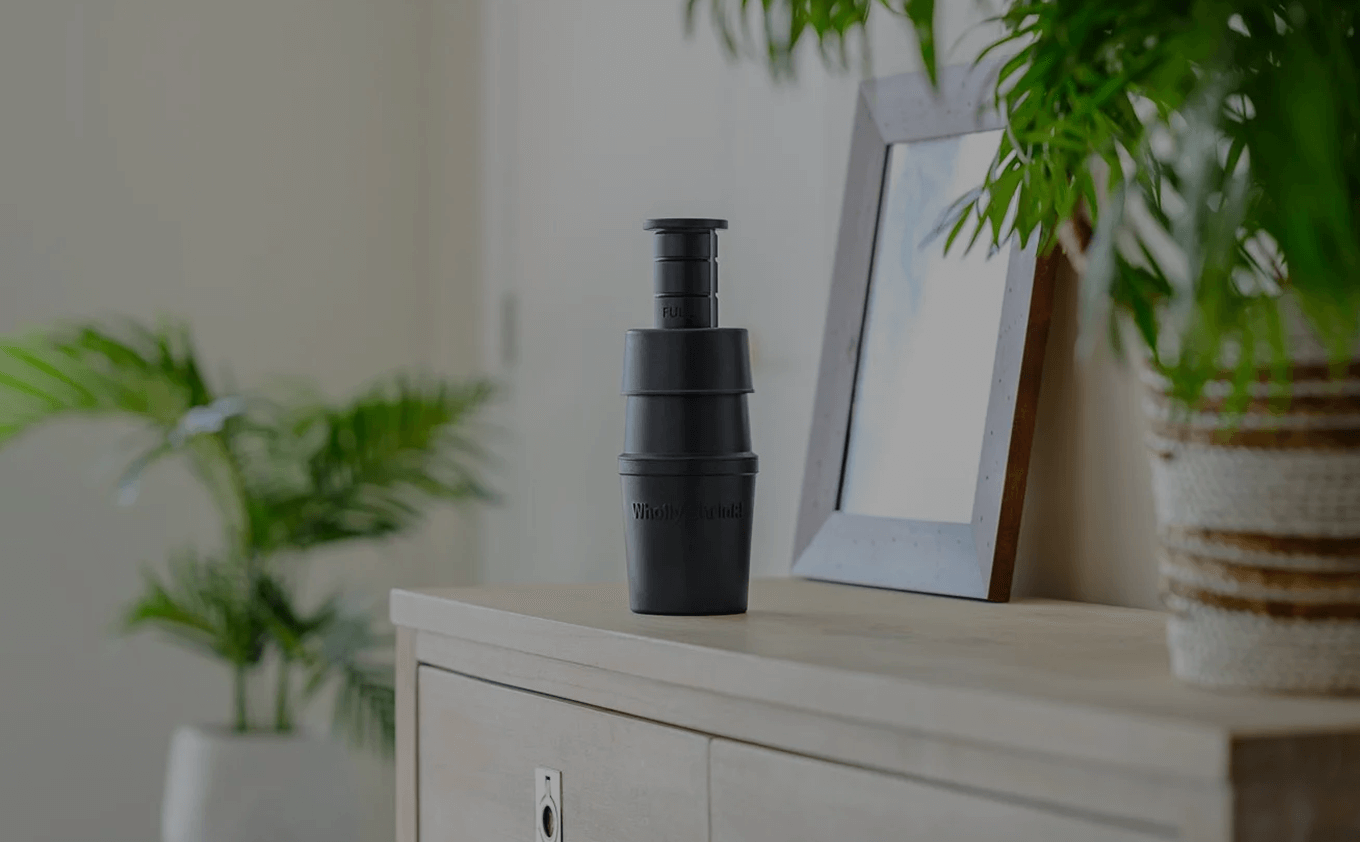
Compressing soft plastics at home, reducing what would otherwise be a bulging bag to a compact, manageable container, changes the daily calculation. The Shrinker! does exactly this, turning a pile of loose packaging into dense nuggets that take up a fraction of the original space. Because the compression is manual rather than thermal, the material is not altered or damaged, and it remains fully recyclable and accepted through both store drop-off and kerbside collection when it arrives. Collection day, when it comes, involves a neat bag rather than an overstuffed drawer, and the habit that got it there is one that actually lasts.
The good news is that the system arriving in 2027 is well-designed, informed by a large-scale pilot and backed by government funding that shifts the cost from councils to the manufacturers who produce the packaging. The households that do not need to adjust their behaviour to fit it, because they have already built the habit, will be the ones who find it most rewarding. For everyone else, 2027 will be a useful deadline. It is close enough to plan around, and far enough away that building the routine now feels comfortable rather than rushed.

